Wednesday, April 20, 2005


I recently went kayaking in Richardson Bay between Sausalito and Tiburon. It was a pretty paddle through marinas and moored sailboats with a view of the San Francisco skyline. It was more urban than my normal jaunts in Tomales Bay but serene in a different way.

I rented a fiberglass Necky kayak for the first time. The model was designed for slightly rough seas. It was most stable when it was leaning just off-center... either leaning into an approaching wave or onto one that just passed. Sailboats are designed the same way. They are more stable in a stiff wind then they are upright. Not knowing this (they explained it all to me when I got back) I went about trying to keep the boat balanced on center. The result of my efforts was that the smallest wave or gust would push me off center making me feel like I was about to tip. As I was paddling, I was constantly shifting my hips to keep as centered as possible... a losing battle given the kayak's hull design. I paddled a bit in the shallows near the beach to try to get comfortable. As I finally ventured out into the Bay, I was immediately hit broadside with a strong gust blowing what little confidence I had right out of me. I continued to paddle out with short, light, cautious strokes... clearly not as committed as the direction of my kayak. The uneasy feelings continued and I contemplated bringing the boat back. I looped back into a marina where the water went calm again. After calming myself, I decided to head out for the Sausalito houseboats, my intended destination.

All of this made me think about what many solo adventurers must think as they are leaving civilization behind and hiking, paddling or sailing into the wilds beyond. In particular, it reminded me of a lecture by Ben Saunders that I saw at this year's TED Conference. Ben cross-country skied from Russia to Canada via the North Pole. He mentioned that he had those feelings as his family and support teams took off in their helicopters after dropping him off in the already remote reaches of Northern Russia. Later, he realized that he was the only person in an area the size of the United States. I imagine that this is only a cool thought to have after you have finished the journey and are telling stories at some pub surrounded by friends. In the moment, they can only generate fear and uncertainty if anything goes wrong. He has a cool website with some great photos of his journey and links to other outdoor adventurers. His most frustrating day was when he skied 14 hours across drifting ice only to realize at the end of the day that he was almost 3 miles behind where he started. Anyone who has had any kind of solo back-country experience has probably contemplated the feeling of being truly alone...…but to be alone at the North Pole, that's amazing.

So, at the risk of sounding like I'm equating my experience in Sausalito with Saunder's experience in the Arctic I'll return to my story. The feeling that I was about to tip over continued for the majority of my trip. It was only on the way back that I started to get comfortable in the slight lean the kayak was designed for. I made it to the Sausalito Houseboats and had several close encounters with seals as I passed their haul-out spot. My tension was ultimately relieved in an encounter I had with a sea lion and sea bird. As I was drifting towards a sea lion in front of me, he dove under. Just as I reached the still-swirling eddies created by his dive, a sea bird came up in the same spot directly under my bow. My heart skipped a beat because I thought it was the sea lion. But I wasn't half as scared as the sea bird as he tried to figure out what my kayak was and then noticed that it was moving. It's moments like that when you realize that even when we city slickers are scared being out in nature that the vast majority of wildlife is more scared of us (often for good reason). The moment made me laugh, forget the tippiness of the kayak and at peace in the moment. Posted by Hello

Friday, April 08, 2005


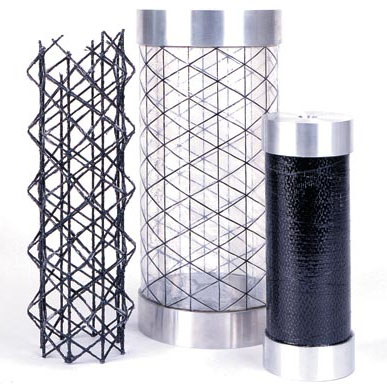
Went to the opening of the Extreme Textiles Exhibit last night at the Cooper Hewitt Museum in New York. This is an amazing exhibit! There is something for everyone here... sci fi, fashion, cool factor and hi-tech. There is some amazing work being done around the world with fabrics. I heard that Matilda McQuaid, the curator had been thinking and planning the exhibit for more than a decade. She did an amazing job. The exhibit features a broad range of applications including industrial, sports, space and military fabrics. Many have samples that you can touch and interact with... a rarity in the museum world. Great job Cooper Hewitt! Posted by Hello

Thursday, April 07, 2005


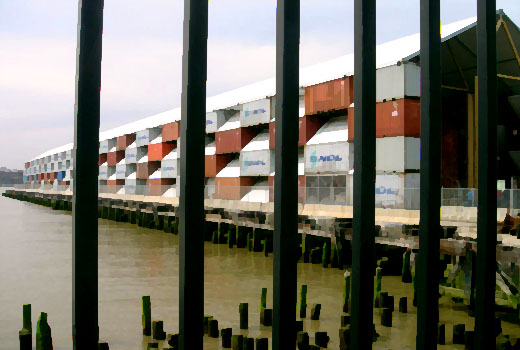
Went to the Ashes and Snow exhibit today at Pier 54 in New York. It is definitely an interesting experience perhaps most of all because of the design of the "Nomadic Museum" that houses it. The building, designed by Shigeru Ban uses materials that reference the frayed edges of New York City... empty shipping containers, giant cardboard tubes, gravel and raw wood. The view down the central walkway inside is worth the price of admission. It's like entering a cathedral but the industrial palette makes it more poetic than religious. The building and exhibit are designed to be easily disassembled and moved to other port cities. This view made me think about New York's constant state of decay and renewal... showing its age and its ability to define where the urban experience is going next.

As for Gregory Colbert's work... it is certainly interesting, especially given that both the building and art exhibit were entirely self-funded. There are a few beautiful and elegant photographs of elephants being revered by children in traditional dress. But after seeing several of these, the photos start to feel a bit contrived. In photo after photo, the child is peacefully sleeping... in puddles, next to a cheetah, and in various poses with the elephants. I get the whole slow time theme but a bit more subtlety would have been more powerful. Still, the walk down and back is a serene, beautiful and peaceful experience. Posted by Hello

Saturday, April 02, 2005


Shot this through the back window of my cab while sitting in traffic. Its always interesting to be in a city like DC... seeing the major sites as a side effect of getting somewhere else. I shot this with the built-in camera on my T-Mobile Sidekick. I think the low resolution and the rear-defogger wires make for a romantic image... it almost has an Alfred Stieglitz's Flatiron Building quality to it. Posted by Hello

Wednesday, March 30, 2005

Top court looks at file-swap technology / Studios want to sue software-maker over downloads

Third Person Perspective
This is an interesting article on the Supreme Court Case regarding file sharing networks. The article and the case have frequently referenced the 1984 Sony Betamax decision that allowed the use of VCR's despite the fact that they could also be used for illegal copying. Gary Shapiro of the Consumer Electronics Association called the Betamax case the, "Magna Carta" of the industry.

Reading the article as an ex-Sony employee was interesting. It was a frequent topic of conversation internally and seeing the quotes from cautious and slow moving Sony media execs made it clear that I am now a third-person observer.

There are legitimate concerns on both sides but the extreme views on both sides are troubling. On the pro side, you have a whole generation of kids that have grown up downloading and burning music without any understanding or feelings that it might be wrong. There is a growing minority that is aware of the ethical issues but in the research we did we found that the large majority of college kids were not even aware of the ethical debate. On the extreme other side of the argument are music and movie executives... a relatively small group with a singular view of protecting ALL uses of their content in all cases with no acknowledgement of how the world might be changing. This is the group that was against radio and the VCR... technologies that have ultimately grown their business by significant margins. Both sides seem to be characterized more by their lack of understanding than their informed opinion.In the end, this is a very difficult issue. There are legitimate copyright concerns that are being ignored by a significant number of people. But, I suspect that the best way to get beyond this is to free consumers and technology companies to do what they do best... (spend and innovate respectively) . The content companies should continue to raise awareness of the issues and work on the new business models that may ultimately reward them with new revenue streams. It seems futile to try to block the natural evolution of a networked world.

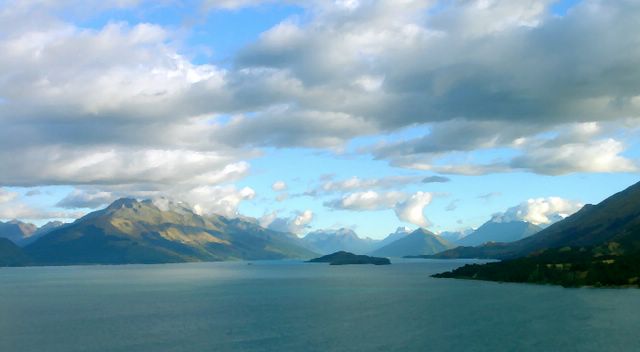
This is a photo of Lake Wakatipu outside Queenstown, New Zealand. Its slightly enhanced but it was an amazing view on a "crisp" (cold in kiwi speak) beautiful morning. We were on our way to Mt. Aspiring National Park (somewhere in the center background) to go canyoning. Little did we know on the way there that canyoning would end up being the scariest thing we did in NZ.  Posted by Hello
OK, I've left Sony after working there for 10 years and I've decided to try and get this blog going again. A quick facelift and we'll see where it heads.

Thursday, August 28, 2003

Tech News - CNET.com
OK, so I might have posted too soon. After talking briefly about corporeal de-referencing, he goes on to kind of say that it was so 90s. That because of things like SARS and post 9/11 racial profiling that body referencing is back in. Still the previous idea is an interesting one. I think his longer term view seems to be the original point and that, as on many issues, societies tend to cycle between opposing views.
Tech News - CNET.com
"Coporeal de-referencing" is how Steve Mann describes the simlarities between cyborg rights and the fight for rights by gays and minorities. Its an interesting twist on the nature of the depate when put in this context. I have always thought about racial equality or women's equality as being discussions about race not being relevant or sex not being relevant. But the way Steve Mann puts it, it is really about the body not being relevant. Racial equality means that the race of the person's body should not be a factor in societal rights such as jobs, pay, voting, etc. In his ongoing experiment with wearable computing and augmented sight, he has on numerous occasions been the victim of discrimination for looking or being different. In his view, if you follow his argument, if we as a society feel that the body should not play a role in social discrimination than the ultimate expression of this is full rights for a being that is mostly, if not entirely... a cyborg. Intersting

Thursday, July 24, 2003

Maybe I should write for the Register UK too | A Whole Lotta Nothing
Interesting posting by Matthew Haughey (of Metafilter fame) about how blogs are starting to distort Google search results. Basically, blogs and bloggers tend to do most of what Google looks for in relevant pages as part of their standard practices. This is tending to make blogs about commercial (and other) topics (eg. a PVR blog by Haughey) appear higher in search results than any of the official company sites (eg. Tivo).

Haughey has designed lots of interesting sites and has some great work to show on his site.

Wednesday, July 16, 2003

Yahoo! News - THE BEGINNING OF THE END?
Interesting editorial about whether or not the fisaco over the inclusion of forged intelligence in Bush's State-of-the-Union address will continue to mushroom or not. I like his observation that when it comes to scandals, "Little things hook big fish: tax evasion for Al Capone, a minor stock trade for Martha Stewart, a sexual dalliance for Bill Clinton."

He also comments that Bush seems to be doing things in reverse...
-- tax cuts for the wealthy (not the poor) during a recession,
-- ramping up troop deployments after the Iraq War
-- and covering-up the intelligence scandal before it took hold.

I'm not sure he's right about the cover up. I think there have been many scandals that have started work on the cover-up before anyone knew there was a scandal. Watergate wasn't immediately public but they sure tried to hide who was behind the break-in.

Monday, July 14, 2003

Intelligence Unglued This story on the Alternet website sheds some interesting light on the whole faulty intelligence blunder in the Bush Whitehouse. It is basically covering an open memo written by a bunch of former CIA analysts. It is clearly well researched and makes it fairly clear that there were some agendas getting in the way of what seem to have been well known truths. Their main point is that it was well known by US intelligence that the document regarding Iraq trying to purchase uranium from Niger was a forgery. But the Bush Whitehouse (and specifically Cheney) used it anyway because it better made their case for war.

It reminded me of this open letter written in 2002 by Michael Moore about George W. Bush and Enron. After the collapse of Enron, Bush denied any friendship with Kenneth Lay, the CEO of Enron. What I found interesting in Moore's letter was his extremely effective use of hyperlinks. Each time he would point out a statement that Bush made about Enron or Kenneth Lay, the statement would be hyperlinked to a story in some mainstream (often in Texas!) press website that made it clear that what Bush had said was not true. (eg. if he didn't know Kenneth Lay what was Lay doing letting George Bush borrow the Enron corporate jet).

Both stories made me think of what it will be like when blogs link to broadband content. So, someone like Michael Moore will write a letter that will string together a bunch of audio or video clips that will create a half hour television show that you can watch at your own pace and pause and rewind the smoking gun moments. Or maybe the former CIA spooks will string together a bunch od declassified intelligence documents along with some real-time satellite feeds from the Middle East that show what the real situation is or was. It's going to get interesting. It will be interesting to see how conservatives and liberals use the technology differently. Maybe one side will link to all facts that bore the hell out of mainstream audiences while the other side will link to a bunch of emotionally charged but factually inaccurate clips. Oh wait, I think they do that now.

Friday, July 11, 2003

MID-TOKYO MAPS Really interesting map site with lots of cool interactivity and comparisons of Tokyo to other cites around the world. very cool.
GeoPhoenix, Interesting company offering zoomable interfaces for small-scale products like PDAs. It seems very similar to some stuff I worked on at my company about 5 years ago. We had many of the same ideas but the portable products weren't able to handle the all the necessary processing yet. I was also sent this link today for a company called TerraDigital. If you click on the TerraTouch demo you'll see that they are also creating a zoomable interface for their home jukebox software. The originator of all of this was, Professor Ben Bederson (along with a few other software engineers). Ben is now at the Universoty of Maryland. Here is a link to his section on Zoomable User Interfaces (ZUI's

Thursday, July 10, 2003

This weekend, we're heading to Tomales Bay. Its only an hour North of San Francisco but worlds away in spirit. We're going to stay at the Holly Tree Inn's Sea Star Cottage. Can't think of the last time I went to sleep with the sound of the ocean/bay nearby. Its such an amazing, relaxing experience to hear the waves as your falling a sleep... wish I could do it more often.

On Saturday, we're going kayaking on the Bay. We're renting kayaks from Blue Waters Kayaking. As long as there's isn't too much wind, the Bay is an amazing place to kayak. There are birds, seals (sometimes), an old indian camp and a slowly decaying artist colony (the buildings are decaying, the artists are all gone).

Pt. Reyes is an amazing place to hike, camp, walk the beach etc. There are so many different aspects to it. There are cattle ranches left over from before it became a National Seashore. There is a great lighthouse at the "point" of Pt. Reyes. Tomales Bay is a long, tranquil, protected bay while the surf rages on the sides facing the Pacific. Beautiful.

Monday, July 07, 2003

CNN.com - Complications hit twins' surgery - Jul. 7, 2003: "Laden and Laleh Bijani"
Watching the news about the surgery to separate Laden and Laleh Bijani, the conjoined Iranian twins got me thinking about my twin nieces. It just so happens that they are being physically separated while one of them goes on a summer exchange program to Ghana.

My nieces are neither conjoined nor identical. They are fraternal twins and have quite independent personalities. But, since they are only in their teens, it might be the longest they have ever been apart from each other. Both events occurring at the same time really got me thinking about what it must be like to separate from your twin. For the Bijani Twins, the effort comes with the un-imaginable risk of losing your twin sister so that you might live. I can't imagine what it must be like... the conversations they had to have. They probably share so many thoughts and yet must each contemplate their own personal preferences while caring so deeply for the other.

My father was a twin. His (non-twin) brother used to say that when Ted got hurt that Ned (my father) would cry. I wonder what it must be like for Bijani twins right now. I hope the surgery goes well. As for my nieces, I get to see one of them in two weeks and can ask her then.
Emerging Technology: Who Loves Ya, Baby? Interesting article about Social Network Mapping by Steven Johnson. It includes work being done by Valdis Krebs, called InFlow that maps organizational relationships. It also covers some research being done by Judith Donath and her team at the MIT Media Lab called, Social Network Fragments. The article uses a reference from Kurt Vonnegut's Cat's Cradle to capture the goal of both efforts. The idea that throughout the world, there are formal organizations (called Granfalloons in Vonnegut's book) that are easy to recognize but often ineffective and informal organizations (referred to as karasses) that are difficult to discern but often highly effective. The classic example of the latter is a successful but temporary project team made up of individuals from multiple organizations.

The most interesting example from Johnson's article was Kreb's work in mapping Amazon purchasing circles. According to Johnson,
"Krebs used InFlow to analyze the network of book purchases surrounding two best-selling titles, one from the left (Michael Moore's Stupid White Men) and one from the right (Ann Coulter's Slander)." What he found was that there was almost no overlap between the people and the titles they purchased. The one exception was Bernard Lewis' "What Went Wrong" a book about the collapse of relations between the Arab World and the West. It is particularly interesting to note that the area of common interest (terrorism) is itself based on temporary "karass" organizations that come together informally to accomplish a task.

This is such an interesting area for me. It seems to be such an active area and one that is empowered by computing and the networked world. Napster, Friendster, Instant Messaging all seem to be leveraging the power of the personal netowrked computer to make visible (and harvest) what was before invisible or at least eclipsed by more dominant hiearchies.

Wednesday, July 02, 2003

An Atlas of Cyberspaces
Cool inventory of cyberspace visualizations. Its interesting to see the range of explorations from literal geographic interpretations to complete abstraction. Most seem to better at creating interesting visualizations than interfaces that can be acted on. Still, I can see some interesting possibilities for the future.

Tuesday, July 01, 2003

Mr Wong's Soup'Partments
This is what I wrote to an architect friend about Mr. Wong's Soup Apartments... "an interesting example of a vertical city that I think is quite functional. Each unit in the building has been designed by the inhabitant... a great example of participatory design. I think this is solid proof that vertical cities are a viable endeavor... and this is just one building.

You'll see that it is also mixed-use supporting residential, commercial and municipal functions. It also learned from Las Vegas (and Times Square) in its ability to use the building as a communication medium including a variety of comments about our current social condition."
Mr Wong's Soup'Partments
Really cool site... the world's tallest virtual building. Each floor is designed and submitted by people from around the world. Great details and social commentary on each floor. Mr. Wong's rules of posting are also an idiosyncratic blend of social responsibility ("no porn" "no advertising your company") and retro CG aesthetic ("no photos, only pixel art"). I think there is something to be learned here for the World Trade Center competition.